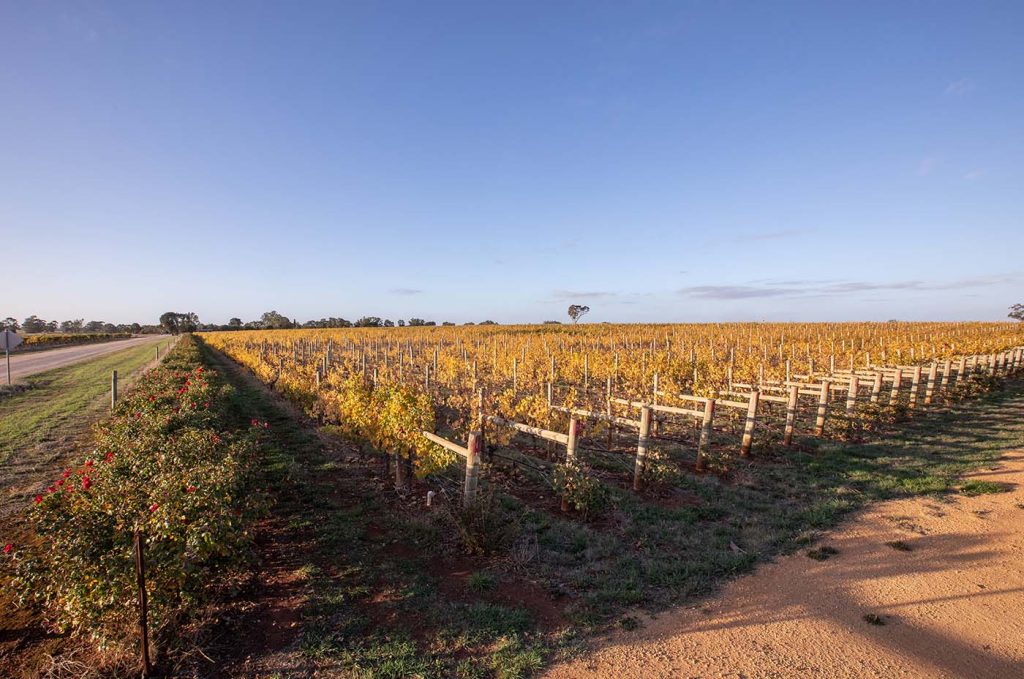
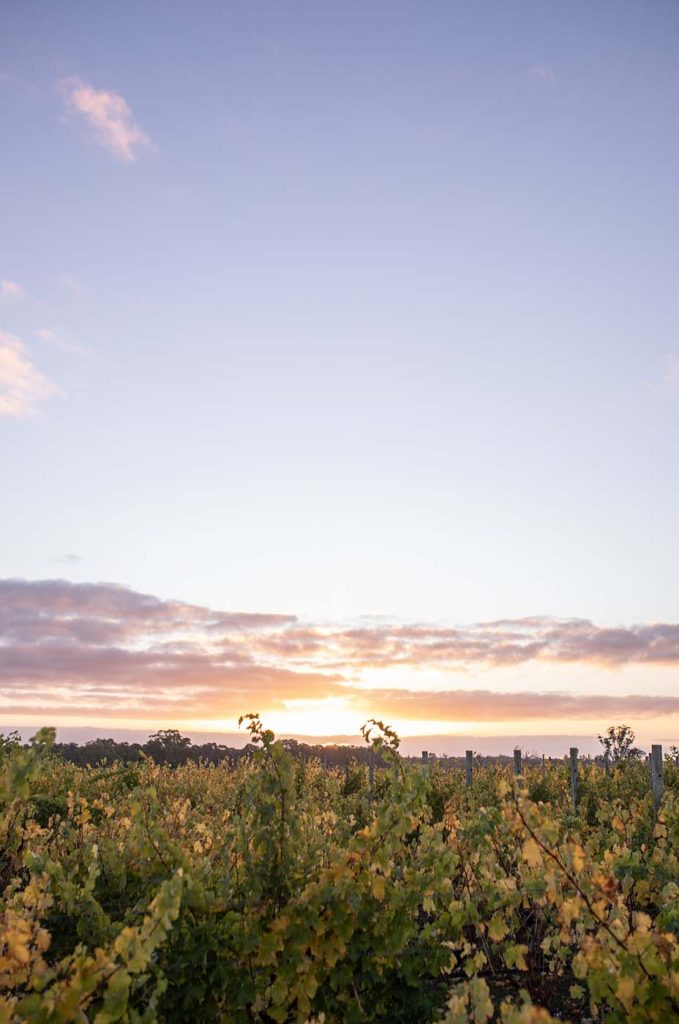
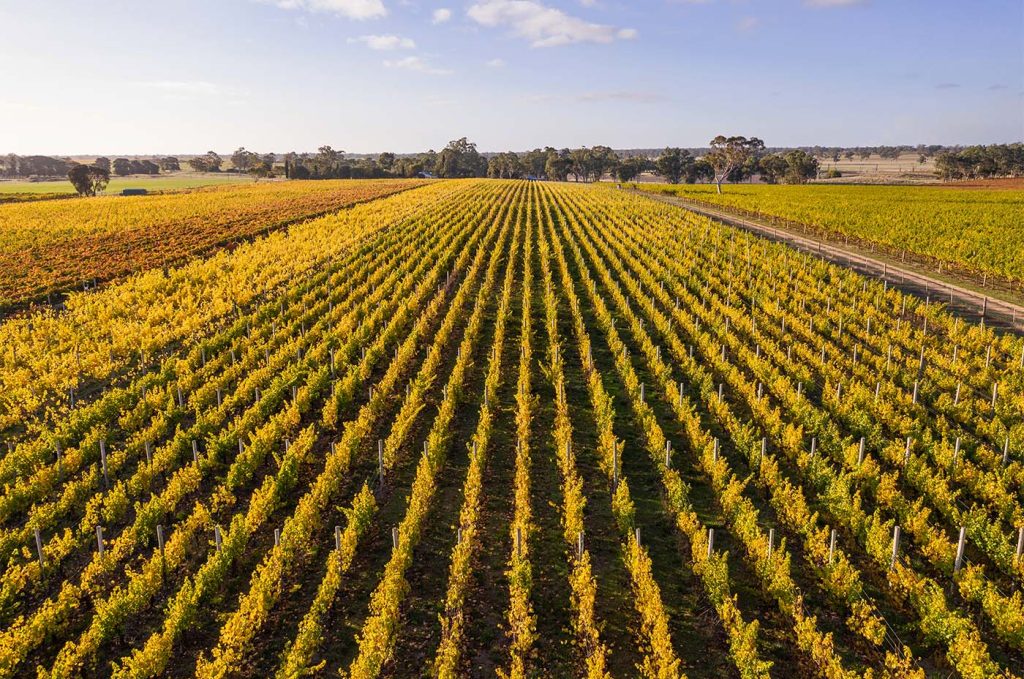
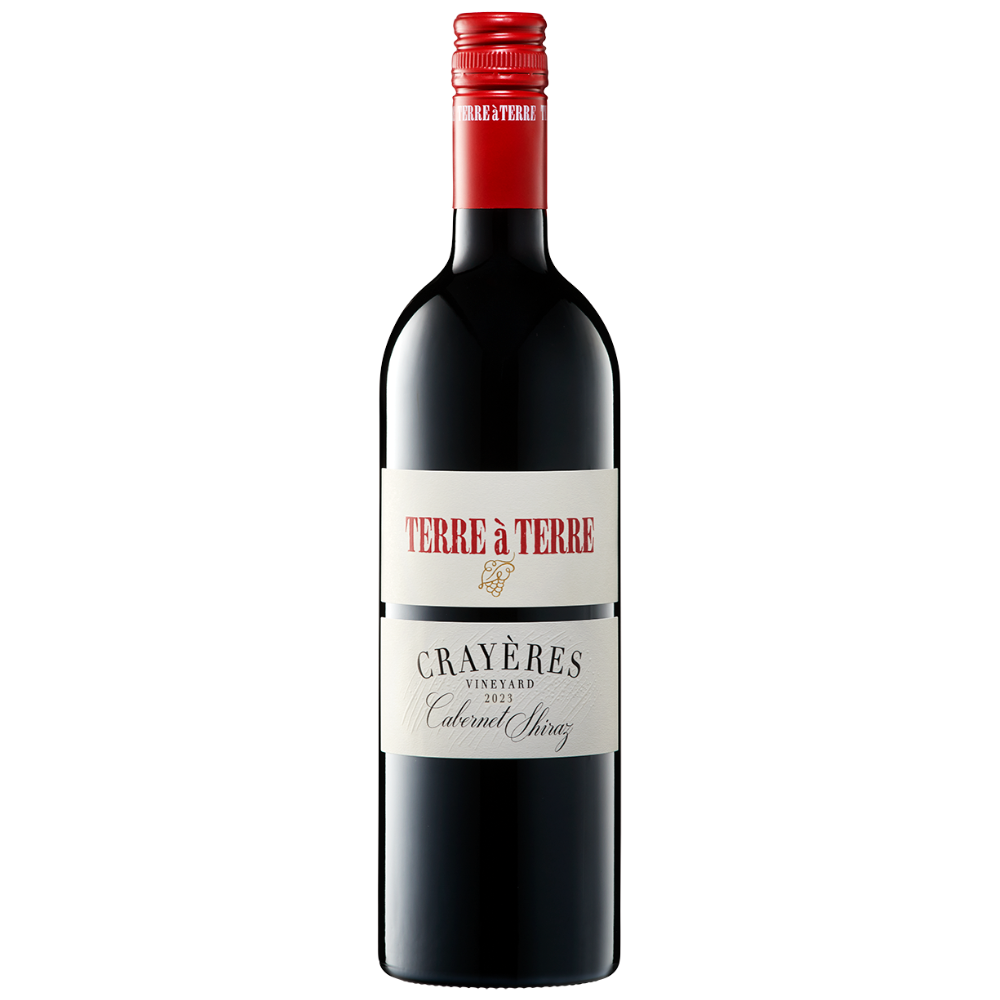
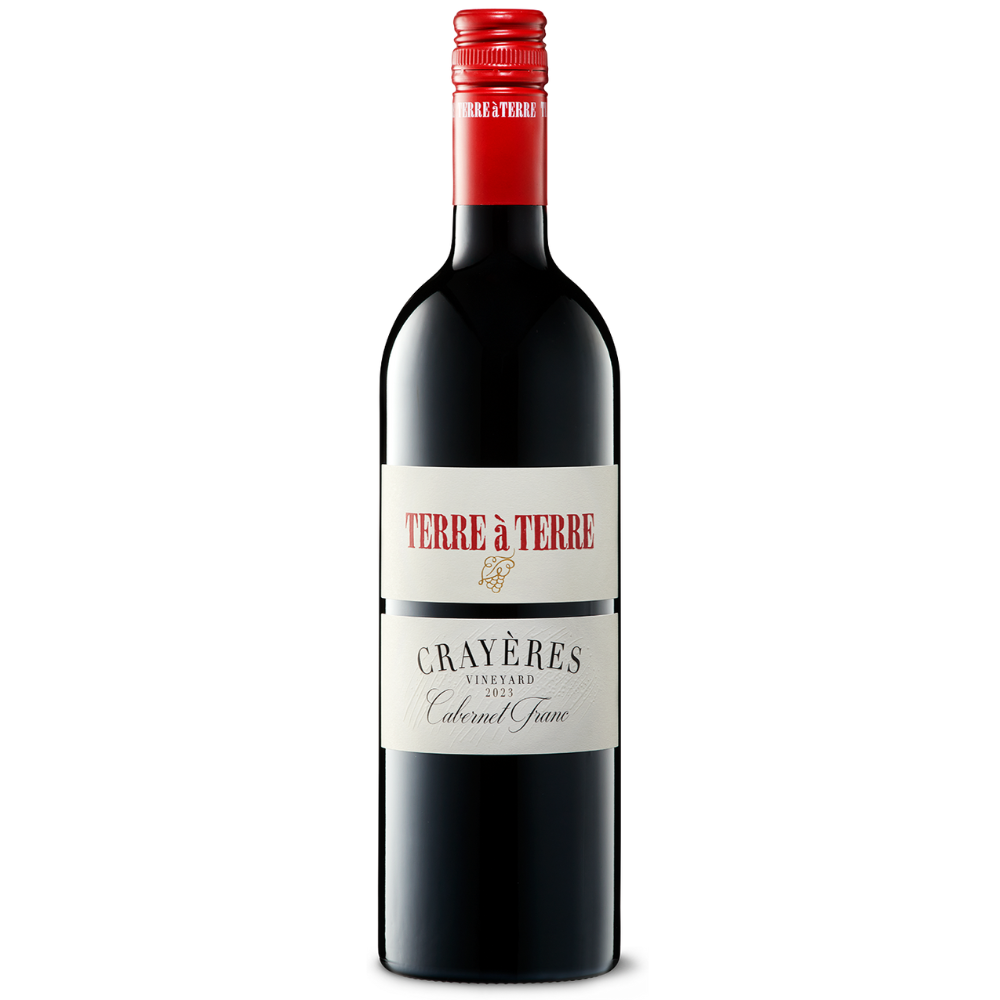
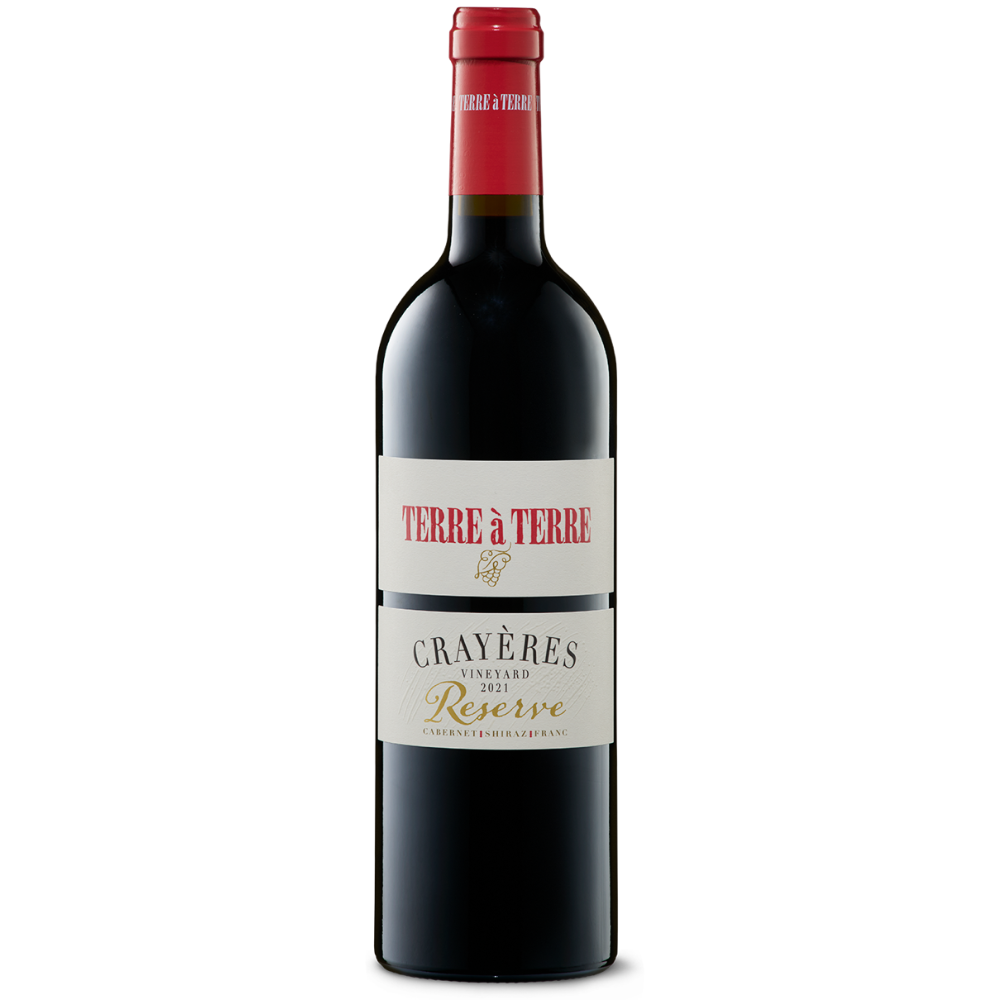
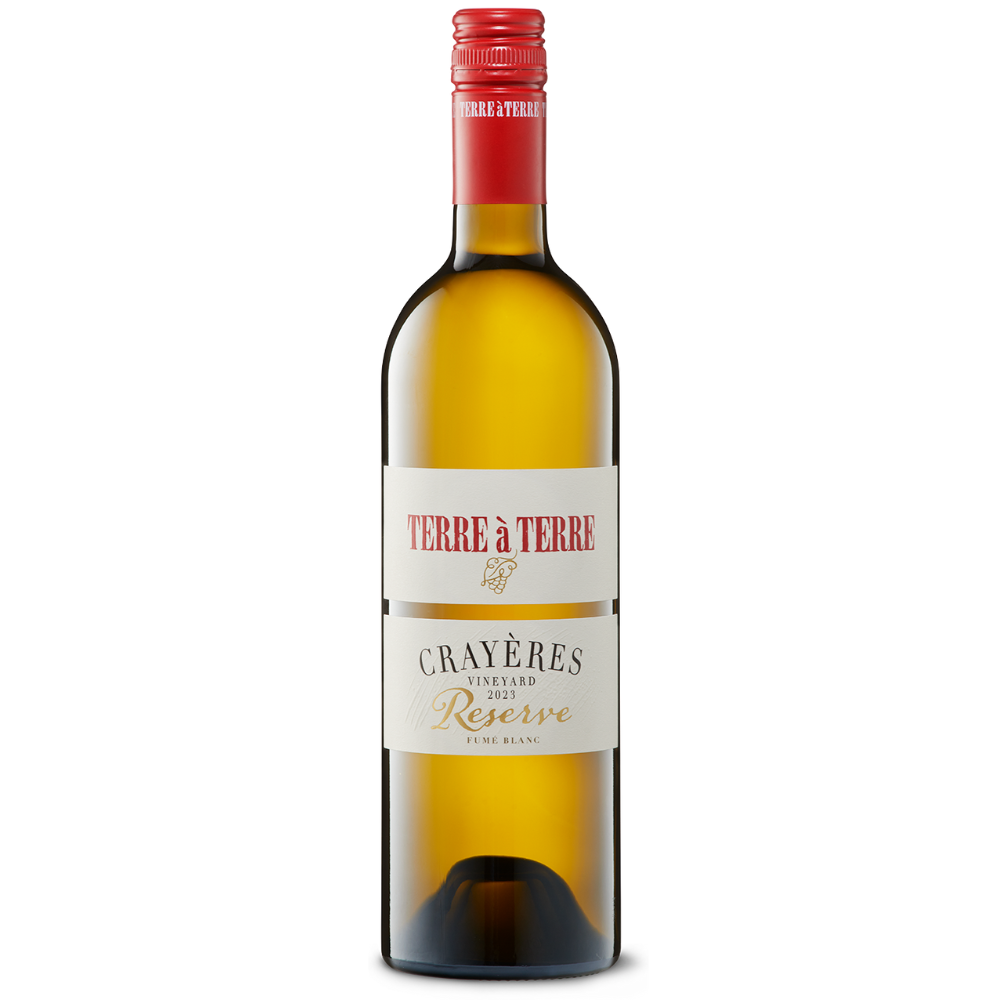
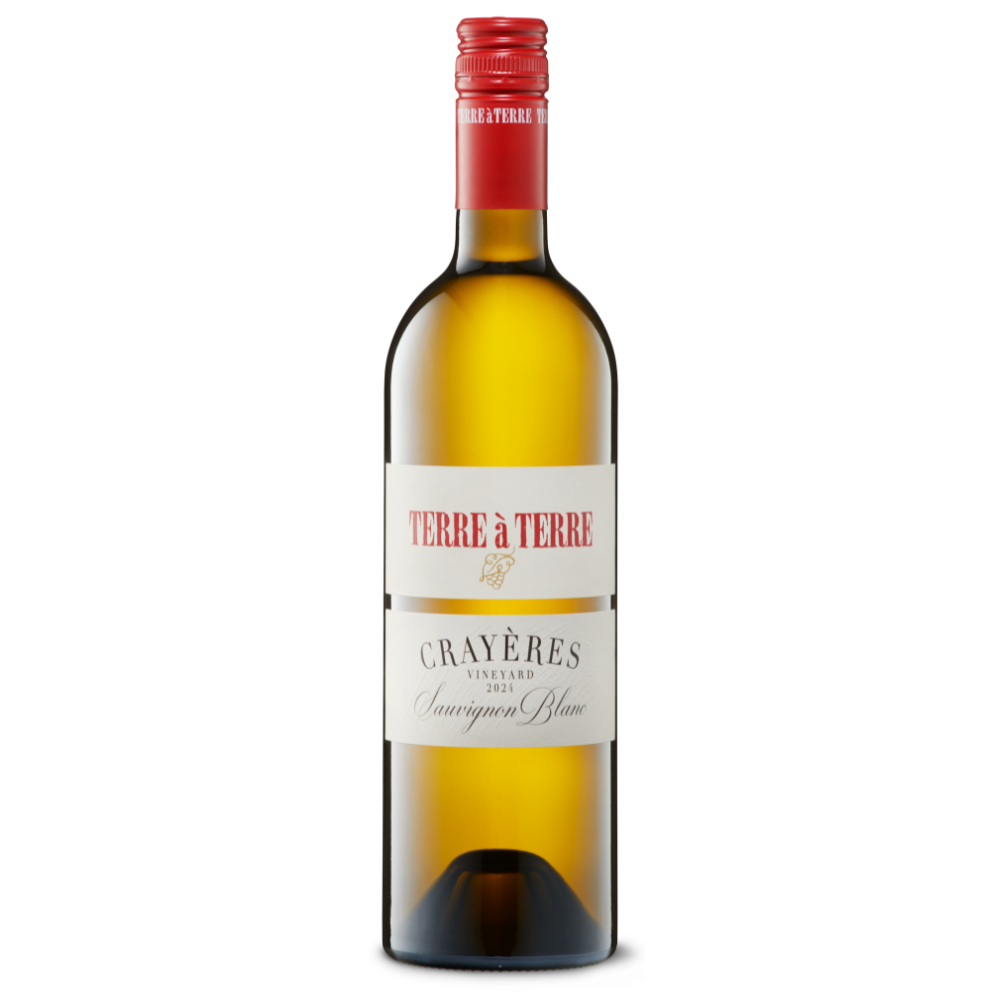
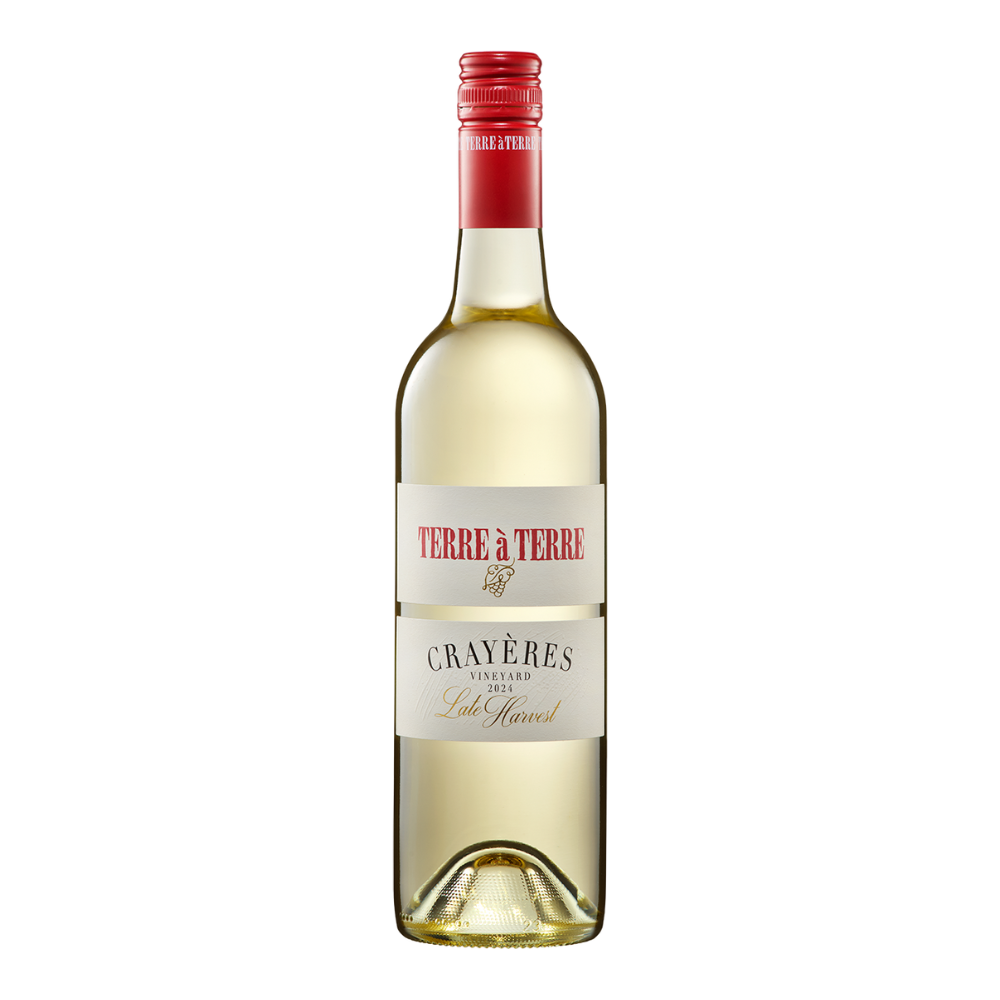
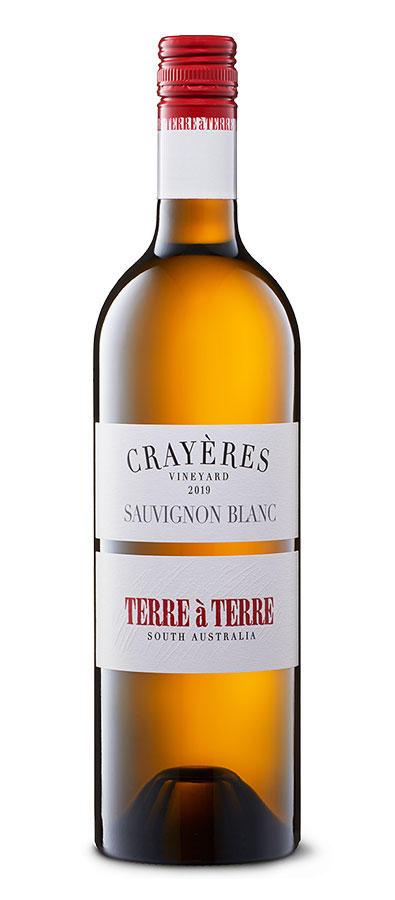
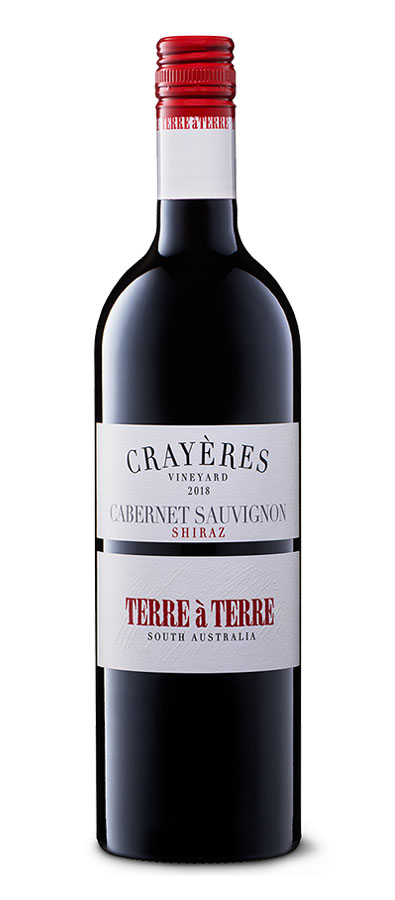
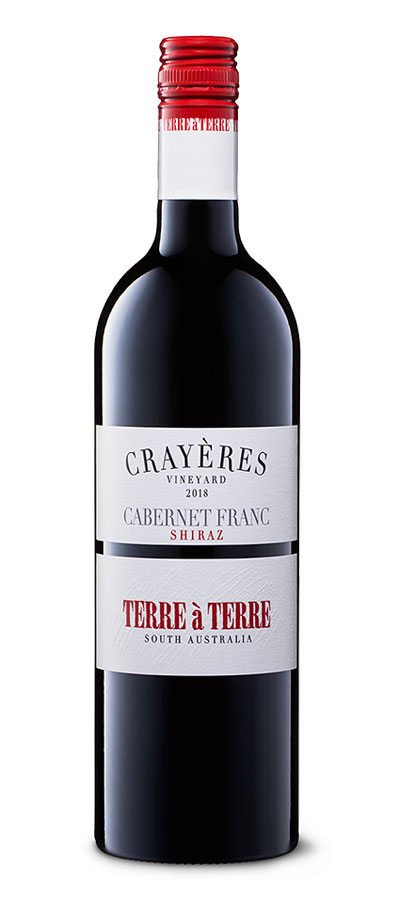
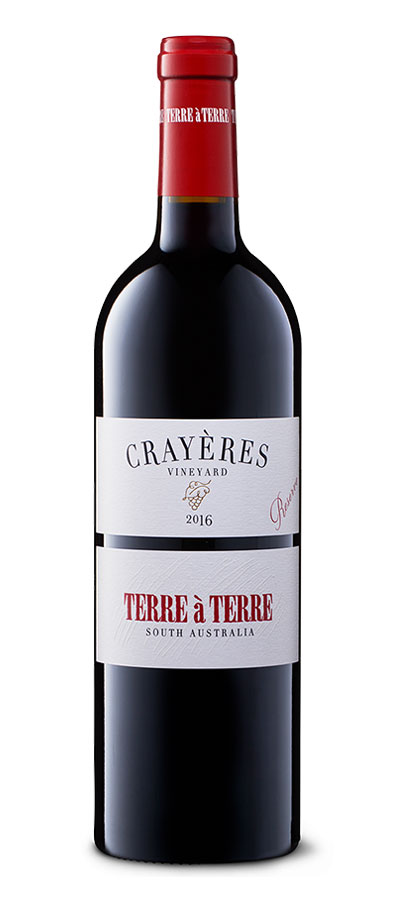
Our Crayères 8-hectare vineyard block was purchased in 2004. Our first Terre à Terre wine was a Sauvignon Blanc from the Crayères Vineyard made in 2008. In 2009, we made our first Cabernet Sauvignon from the Crayères Vineyard, and in 2014 we made our first Cabernet Franc and Shiraz.
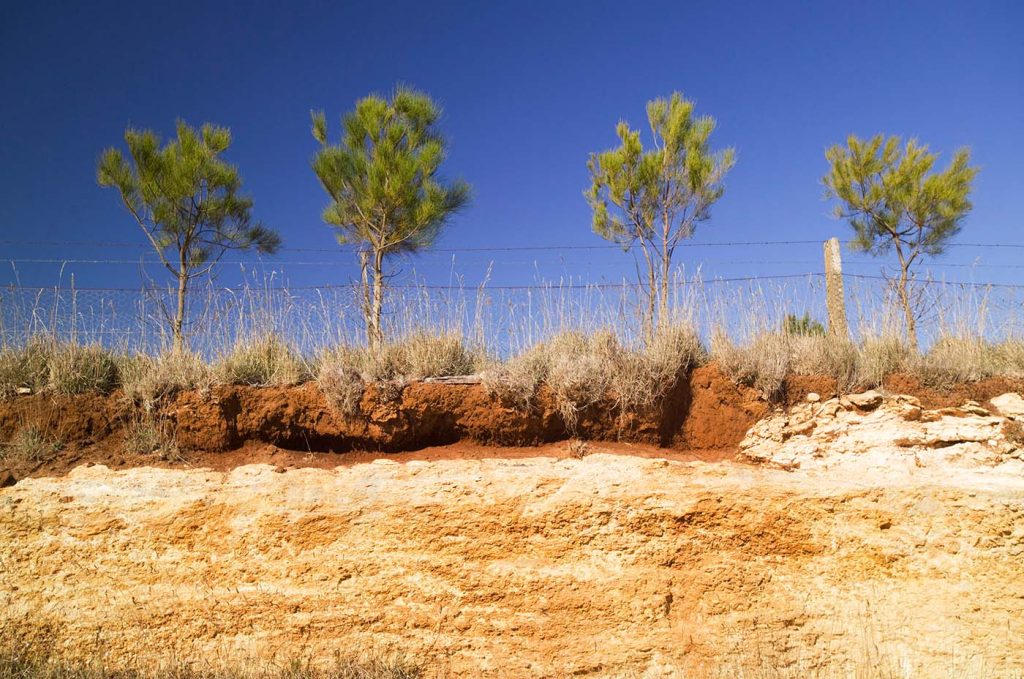
This phenomenal vineyard sits on the crest of a north-south 35-million-year-old Oligocene limestone ridge covered by terra rossa soil. On its eastern flank, a layer of Bridgewater eolian sands covers the ancient terra rossa soil. While ripping the vineyard block before planting, the entrance to a limestone cave network was discovered. Hence we have given the vineyard the name of Crayères (Crayères, from craie – limestone in French – is the local name of the underground network of caves that are found in the Champagne wine region). The Crayères cave contains the undisturbed fossilised remains of ancient megafauna that are unique in the world, and which will be the subject of extensive research in the near future.
We manage the Crayères Vineyard ourselves and retain all the fruit every year for our own wines. The close spaced (1.5m x 1.5m) Crayères Vineyard is cane pruned (Guyot Double) and is pruned by hand. The rocky soils of the Crayères Vineyard do not allow us to control undervine weed growth mechanically. We limit the use of chemicals sprays to sulphur and copper and some preventive fungal sprays. We manually manage trellis and shoot growth during the growing season to optimise sunshine in the canopy, and we also control yields with manual bunch thinning when required.
WRATTONGBULLY GI
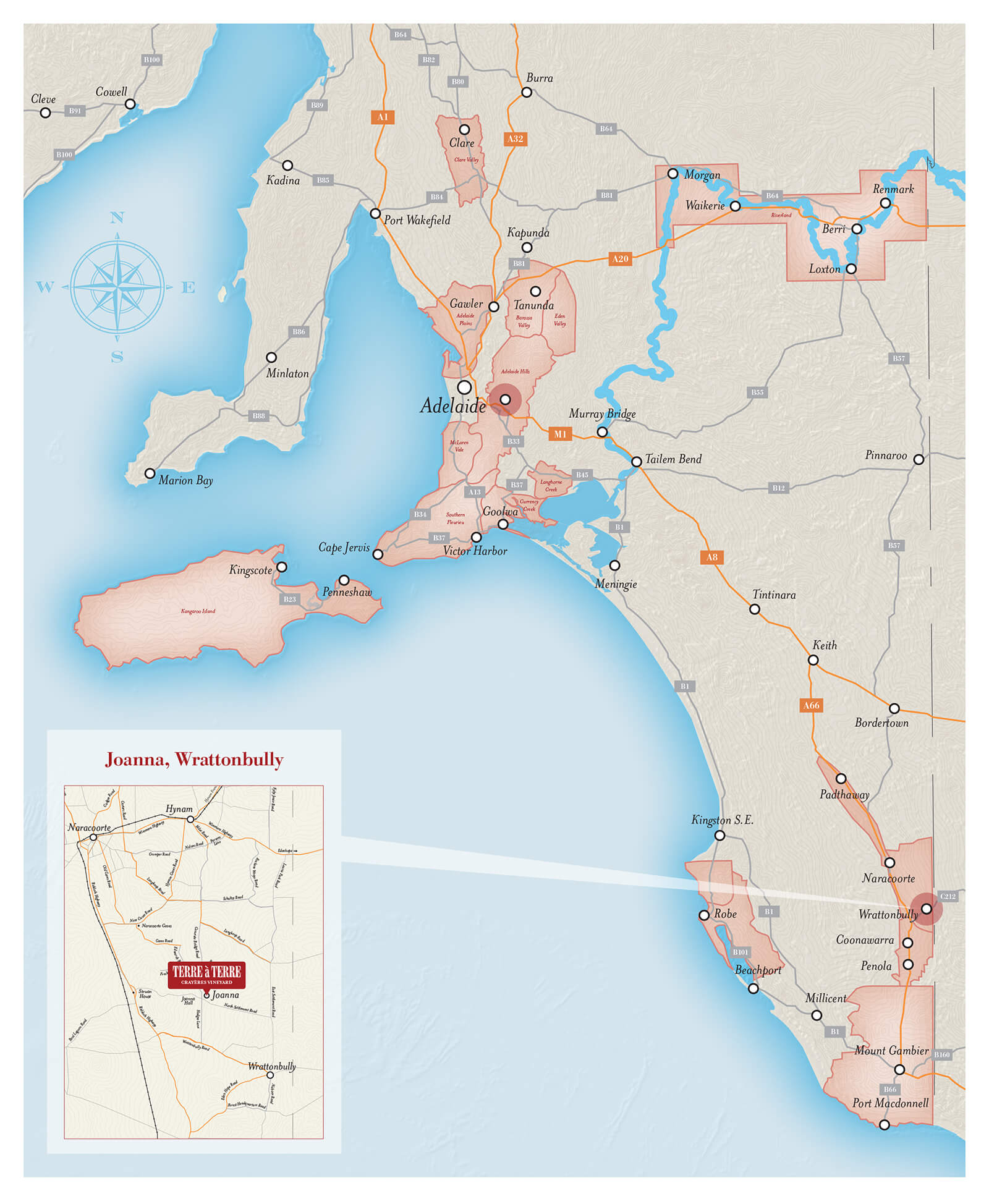
The Crayères vineyard is in the Wrattonbully GI, located just north of Coonawarra and south of Padthaway. The Wrattonbully terroir is very similar to the Coonawarra terroir in that it has limestone ridges covered by terra rossa soils.
The Crayères vineyard is in the Wrattonbully GI, located just north of Coonawarra and south of Padthaway. The Wrattonbully terroir is very similar to the Coonawarra terroir in that it has limestone ridges covered by terra rossa soils. However, the vineyards in Wrattonbully are located east of the Kanawinka Fault, and are more elevated than the coastal plains vineyards, as well as being on much older limestone and much older soil sediments (35 million-years-old vs. 800,000 years-old for Coonwarra). The climate in Wrattonbully is very similar to Bordeaux with heat summations of 1,350 degree days during the growing season.
The Australian Geographical Indication (GI) “Wrattonbully” was entered in the Register of Protected Names on 5 July 2005 – (see map below for boundaries of Wrattonbully GI) and is contained within the much larger Limestone Coast GI (which was entered in the Register of Protected Names on 27 December 1996).
As such, Wrattonbully is considered a fairly new wine region of Australia. However, the first plantings in Wrattonbully date back to 1969, when 11 hectares were planted by the Penders, including 4 hectares of Shiraz, 4 hectares of Cabernet Sauvignon and 4 hectares of Chardonnay. This was followed by John Greenshields, with his Koppamurra Vineyard in 1974, where he planted 4 hectares of Cabernet Sauvignon. This particular vineyard has since been bought by Tapanappa and re-named the Whalebone Vineyard, and is situated just across the road from the Terre à Terre vineyard.
Wrattonbully has increased significantly in size since its early plantings and now comprises around 2,600 hectares of vineyards, most of which is Cabernet Sauvignon.
Discover the map of the Wrattonbully wine region below.
We are in the process of collecting long-term data in the vineyard. Crayères Vineyard Growing season (October to April) heat summation – base 10°C days.
(all in °C)
Avg
2016
2017
2018
2019
2020
Wrattonbully (Joeville), CliMate data
1466
1881 (+28.3%)
1585 (+8.1%)
1799 (+22.7%)
1629 (+11.1%)
1494 (+1.9%)
VINEYARD BLOCKS
SAUVIGNON BLANC
The 2-hectare Sauvignon Blanc block was planted in 2004 on sandy loam over terra rossa soil, on the crest of a north-south oriented 35 million- year-old limestone ridge in the heart of the Wrattonbully wine region. A further 1 hectare of Sauvignon Blanc was planted in 2013.
French clones were used, grafted onto 101-14 rootstocks. The vines were planted at a density of 4,444 vines per hectare, 1.5m x 1.5m, making it the closest spaced Sauvignon Blanc vineyard in Australia.
The fruiting wire is only 50cm above ground, earning the vines the nickname of the “low vines” amongst the local winemaking community.
CABERNET SAUVIGNON
The 3-hectare Cabernet Sauvignon block was planted in 2004 using the same layout as the Sauvignon Blanc (at 4,444 vines per hectare). Australian clones were used (CW44 and Reynella). The Cabernet Sauvignon vines are planted on the western flank of the Terre à Terre vineyard, where the soil is pure terra rossa over 35 million-year-old limestone rocks.
CABERNET FRANC
The 1-hectare Cabernet Franc block was planted in 2008, alongside the Cabernet Sauvignon. The vineyard was planted with cuttings from the Whalebone vineyard and also some French clones, all grafted on to rootstocks. The Cabernet Franc was planted at a density of 4,444 vines per hectare.
SHIRAZ
The 1-hectare Shiraz block was similarly planted in 2008, alongside the Cabernet Franc. The block was planted with grafted cuttings from recent clonal selection material made by the Yalumba nursery from cuttings retrieved from old Barossa and Eden Valley vineyards. The density is 4,444 vines per hectare.
VINEYARD BLOCKS
Sauvignon Blanc
The 2-hectare Sauvignon Blanc block was planted in 2004 on sandy loam over terra rossa soil, on the crest of a north-south oriented 35 million-year-old limestone ridge in the heart of the Wrattonbully wine region. A further 1 hectare of Sauvignon Blanc was planted in 2013.
French clones were used, grafted onto 101-14 rootstocks. The vines were planted at a density of 4,444 vines per hectare, 1.5m x 1.5m, making it the closest spaced Sauvignon Blanc vineyard in Australia.
The fruiting wire is only 50cm above ground, earning the vines the nickname of the “low vines” amongst the local winemaking community.
Cabernet Sauvignon
The 3-hectare Cabernet Sauvignon block was planted in 2004 using the same layout as the Sauvignon Blanc (at 4,444 vines per hectare). Australian clones were used (CW44 and Reynella). The Cabernet Sauvignon vines are planted on the western flank of the Terre à Terre vineyard, where the soil is pure terra rossa over 35 million-year-old limestone rocks.
Cabernet Franc
The 1-hectare Cabernet Franc block was planted in 2008, alongside the Cabernet Sauvignon. The vineyard was planted with cuttings from the Whalebone vineyard and also some French clones, all grafted on to rootstocks. The Cabernet Franc was planted at a density of 4,444 vines per hectare.
Shiraz
The 1-hectare Shiraz block was similarly planted in 2008, alongside the Cabernet Franc. The block was planted with grafted cuttings from recent clonal selection material made by the Yalumba nursery from cuttings retrieved from old Barossa and Eden Valley vineyards. The density is 4,444 vines per hectare.