

The 2026 vintage has the hallmarks of a cool-climate vintage (late ripening in autumn for all our sparkling varieties) with a warm, dry summer.
The winter months were cooler and wetter than average, delaying budburst by two weeks. Spring temperatures remained cool, with good rainfall, which conveniently delayed flowering into the warmer, drier month of December. Flowering was also two weeks later than average and was followed by a promising set in Pinot Noir, Pinot Meunier and Chardonnay. Veraison started early February in the Pinot Noir blocks and mid-February in the Chardonnay blocks, one month later than in 2025.
The 2026 vintage is in line with the five cooler vintages from 2020 to 2024, but in a unique way, as summer was warm and dry, perfectly suited to ripen our sparkling grape varieties in Piccadilly Valley. 2026 was indeed a later vintage for us, although still earlier than 2023, 2017 and 2011, which are all cooler vintages than 2026. The reason for the late ripening is the delayed phenological ripening of the grapes caused by the cool spring. Final ripening occurred in the cooler months of autumn, resulting in good acid retention and perfect phenological ripeness for sparkling winemaking.
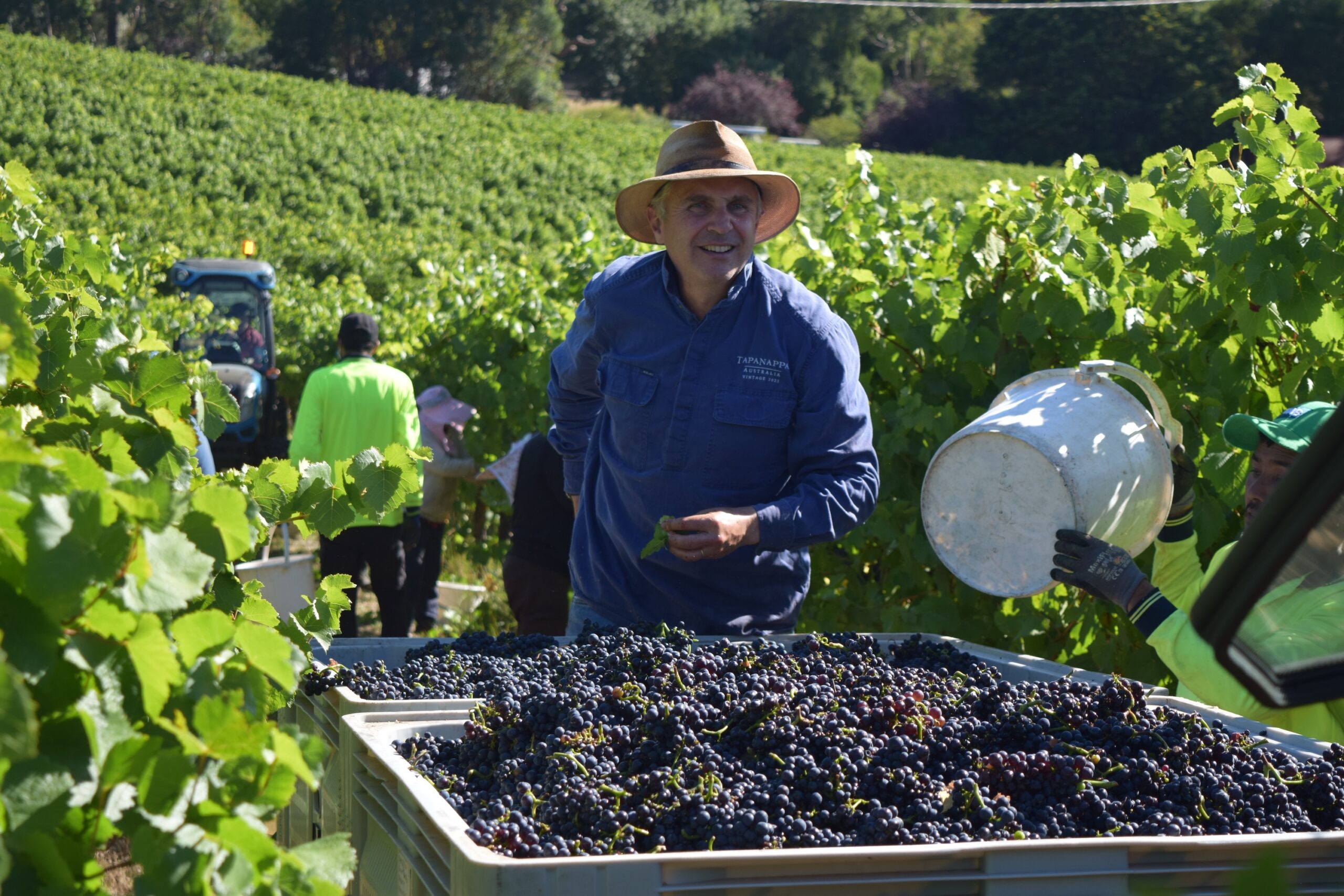
We started picking French clones of Pinot Noir and Pinot Meunier in mid-March, then moved on to the Australian clones of Pinot Noir, finishing with Chardonnay towards the end of March.
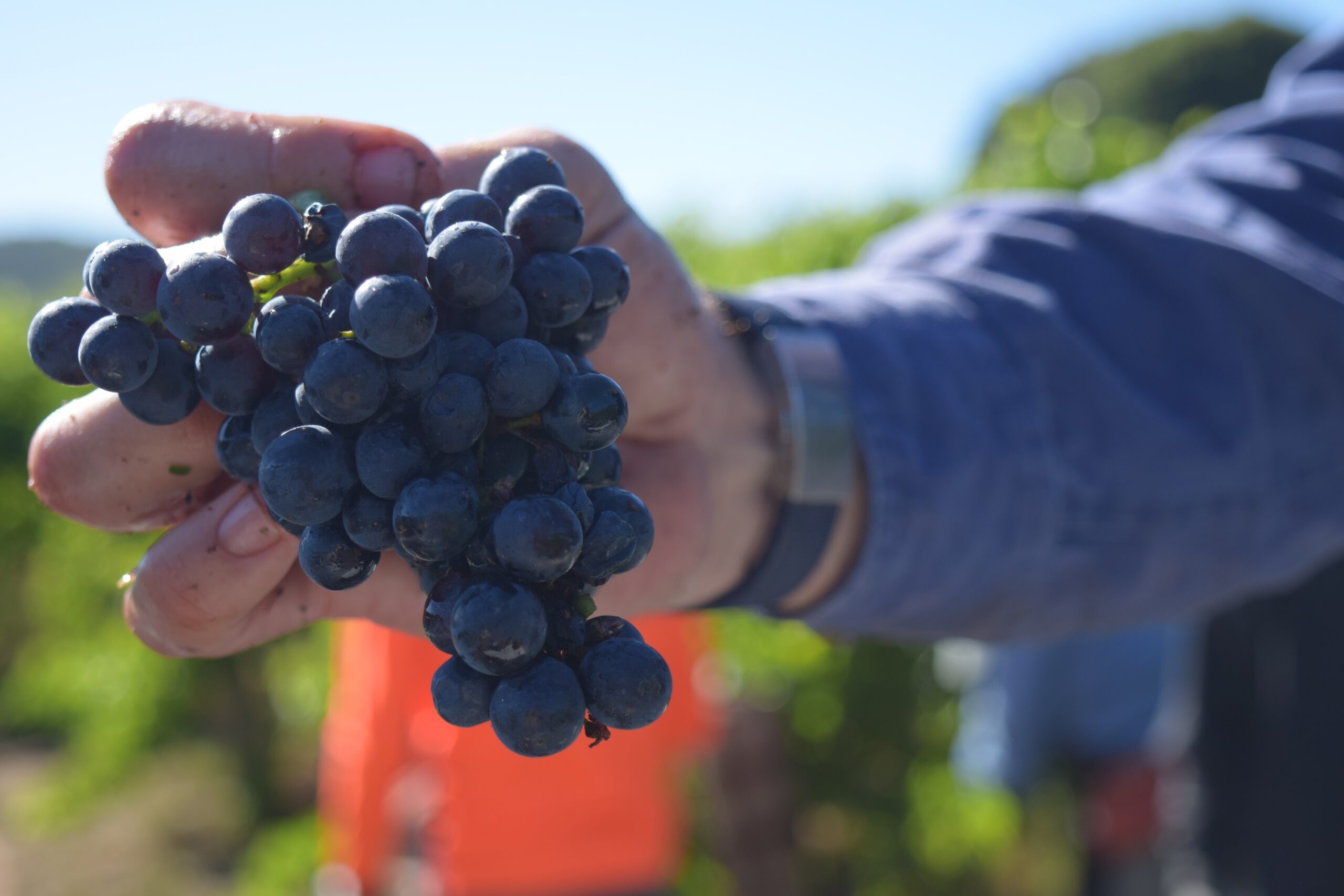
In 2026, for totally different reasons, we noticed that the grape juices had perfect acidities (both malic and tartaric) for the production of high-quality sparkling wine, and that the sugars in all our blocks remained at lower levels. Our French clones of Pinot Noir had sharp fruit flavours (strawberries, cassis). We noticed a similar pattern in the Pinot Meunier with the core fruit of red peach and raspberries. The Chardonnay grapes showed very expressive grapefruit and stone-fruit flavours. All the juices share elegance, freshness, and classic Piccadilly Valley fruit expression.
DAOSA Blanc de Blancs
Bizot Vineyard
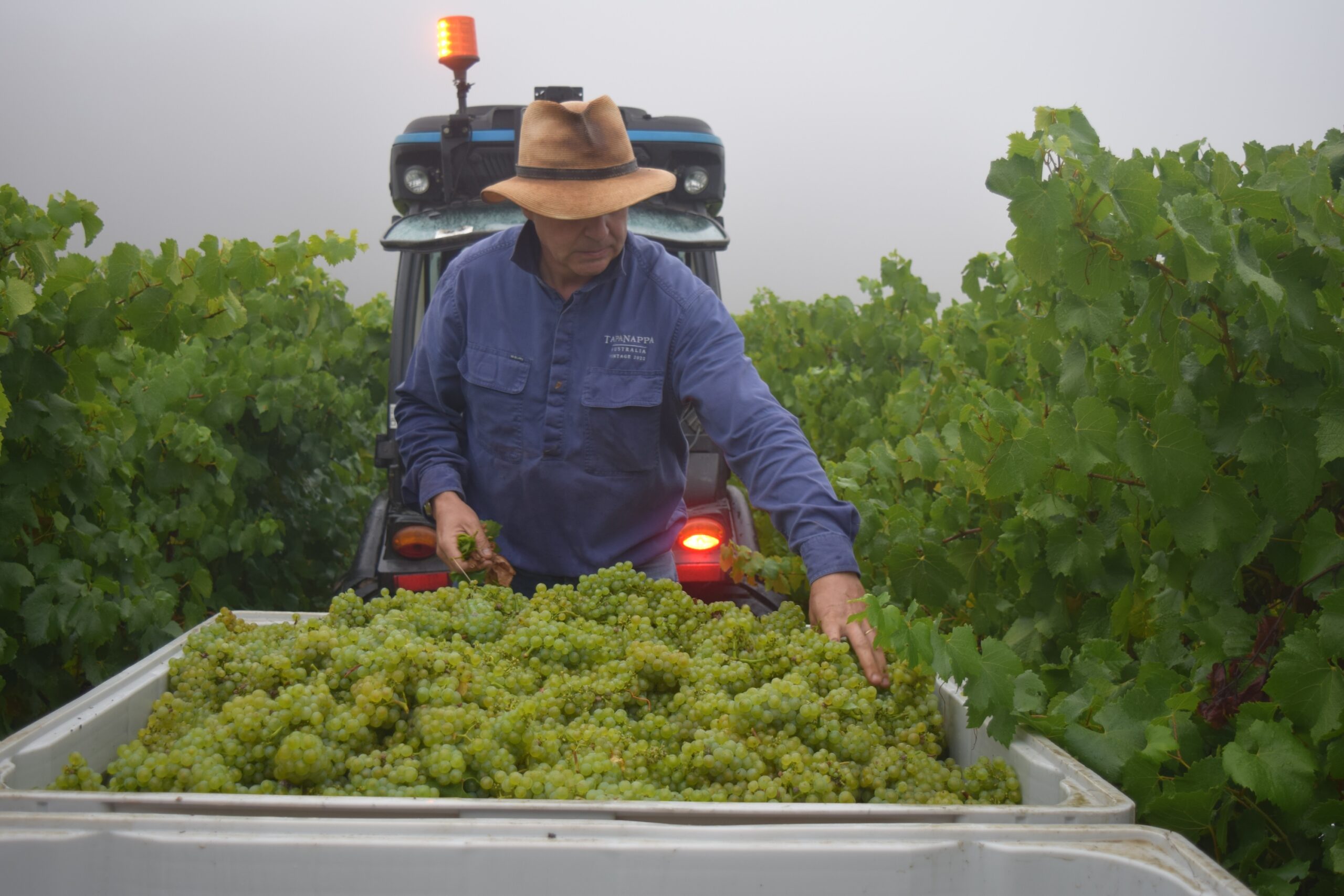
The Chardonnay (clones 76, 95, and 96 from the Bizot Vineyard), used for our DAOSA Blanc de Blancs base, was handpicked on the 19th and 20th of March. Yields were slightly lower than average for Piccadilly Valley at around 4t/ha. The juices show very ripe Chardonnay flavours of white stone fruit and grapefruit, typical of our Bizot Vineyard fruit, combined with balanced acidity and low sugar levels.
DAOSA Natural Réserve 11th Release
Piccadilly Valley Vineyards
Good yields (on average 6t/ha) of Pinot Noir and Pinot Meunier from our Piccadilly Valley vineyards were hand harvested from the 10th until the 14th of March, one full month later than in 2025 and more than two weeks earlier than 2023. The fruit shows the classic strawberry character of Pinot Noir and red stone fruit of Pinot Meunier. Above-average yields of Chardonnay (on average 7t/ha) from our Piccadilly Valley vineyards were hand-harvested from the 18th of March until the 23rd of March, with perfect flavour ripeness, and will bring a lot of complexity to the fresher Pinot Noir and Pinot Meunier in the final blend.
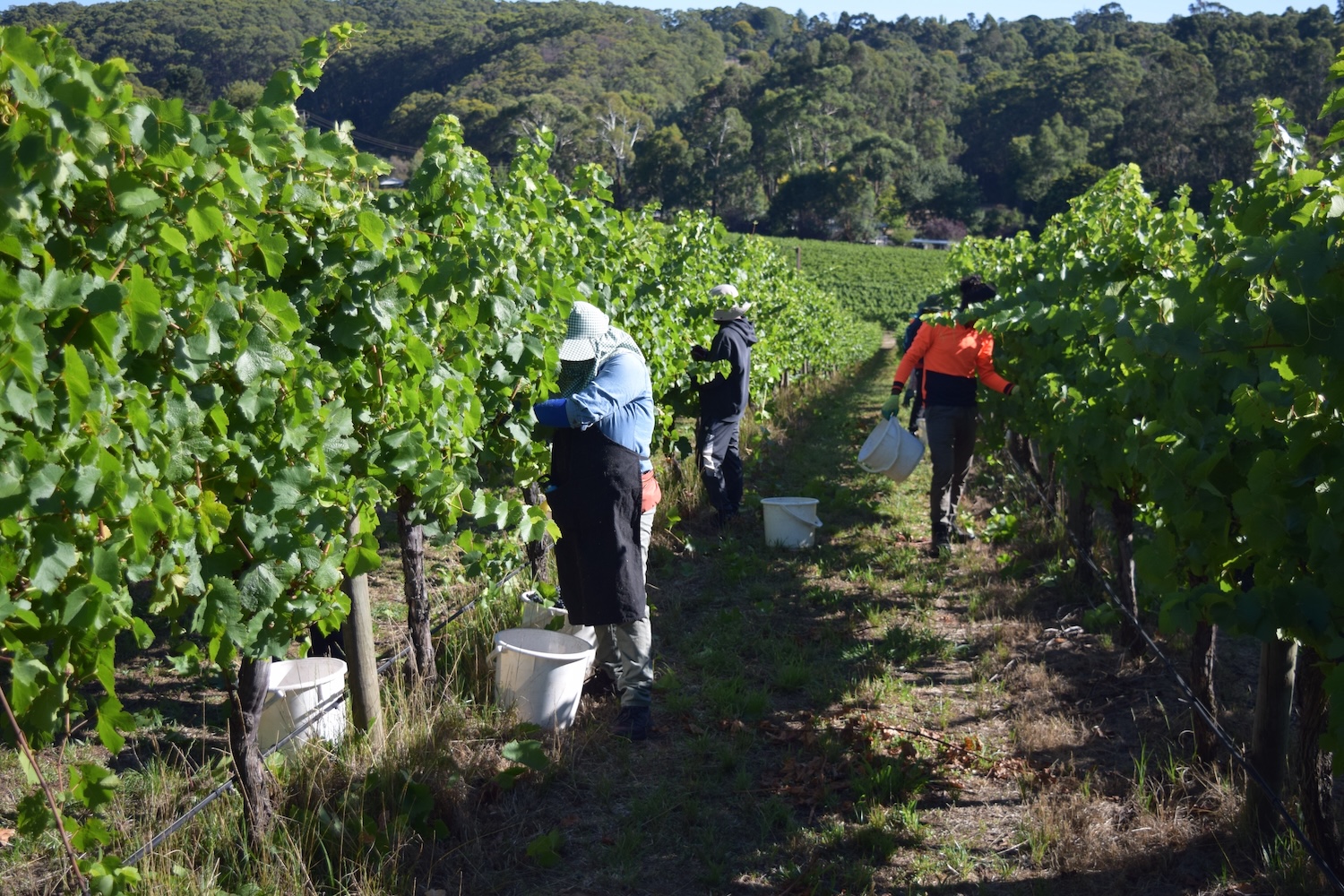
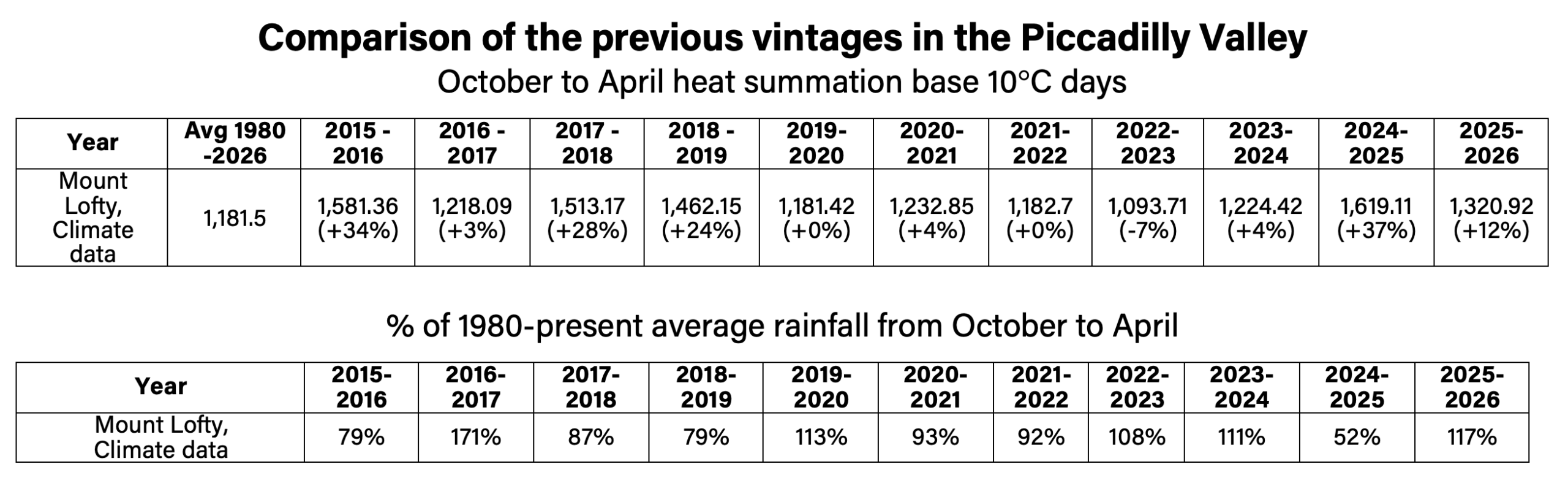
The 2026 vintage in the Piccadilly Valley was average for temperatures and rainfall, but the fruit was picked much later than average. This is explained by the fact that late spring heat summations (October and November) were 25% cooler than the long-term average, while rainfall for these two months was 100% above average. These cool, wet conditions delayed budburst, which in turn postponed the onset of flowering, which occurred in early December. The warm, much drier December conditions allowed for a very good set, and the following dry, warm months, January and February, were ideal for picking the grapes, with timely veraison in mid-February. Harvest was late for our Pinot Noir and Chardonnay, starting mid-March for the Pinot Noir and Pinot Meunier and finishing late March for the Chardonnay.